Michael Moon begins his book review of Alison Bechdel’s graphic novel, Fun Home by rightly saying that “It’s hard to imagine a more ‘bookish’ graphic narrative than Allison Bechdel’s Fun Home.” Fun Home is a richly layered narrative with numerous allusions to the stalwarts of Western literary canon be it Joyce or Proust or Hemingway and so many others. Within these seething references to literary and artistic influences, lies Alison’s own story of growing up, coming to terms with her family’s eccentricity and most particularly her father’s own life trajectory too.
What is it about?
As the title suggests, the graphic novel is styled like a memoir where Bechdel traces her growing up in a small Pennsylvania town, in a house that her father painstakingly restores to its former Victorian stature which is also when Bechdel as a child begins to hate the kind of ornamentation her father glorifies through this restoration. This itself seems a tad bit ironic given the kind of lush intertextuality that suffuses the graphic novel itself. Of course, references are not ornamentation of the same kind as her father’s obsession with ornamental and exquisite objects. Yet aren’t allusions themselves a sort of artifice, employed to offer a deliberately intended effect which is somewhat similar to the effect that her father’s restoration of the house created?
But to come out of that digression, in the graphic novel, Bechdel gives a glimpse also of her father’s profession as a high school English teacher and a funeral home director in their town, weaves in her parents’ fraught relationship and the impact of her own college days on her understanding of her identity and sexuality.
Covid-19 pandemic ushered in major changes in the number of users (from teachers to students to parents) accessing e-learning platforms for their child’s education. Virtual classrooms have boomed whether it is schools conducting online Zoom classes or various other modes of e-learning that mushroomed to fill in the lacuna that Covid-19 lockdowns brought for education. E-learning offered not just classes on different school subjects but also classes and courses on various other skills from public speaking to coding to creative writing. Covid-19 lockdowns led e-learning forums to optimize on this sudden and complete stop of children having access to offline classes for these extra-curricular skills too.
One of the most prominent features within e-learning is utilization of audio-visual elements when framing the courses and marketing them. The audio-visual elements are interwoven with more traditional methods of having a teacher/tutor present, albeit online. Using these elements as teaching aids and to market their courses is not surprising. HubSpot’s 2021 State of Marketing Report concluded that video was the top content marketing strategy used by brands. According to Cisco Annual Internet Report (2018–2023), videos were expected to occupy a whopping 82% of all internet traffic by 2021. This figure is bound to increase in the years to come, especially in the post-Covid era. A part of this video usage comes under e-learning as well.
What is usually focused on in these audio-visual elements though is their visual aspect, while the strengths of the audio tend to get forgotten. But say one uses an animated explainer video on past perfect and past perfect continuous tense, how important would a voice-over be for that animated video?Voice overs play a very crucial role in determining the narration, flow and tone of the content in an educational video. Along with background and ambient music, the voice over can get the students and learners excited, perked up to be part of the concepts that are going to be explained in a that specific video. What’s more is that the voice over can easily converge the child’s attention to particular points of the narration. With creative use of a narration or a story, even drier topics like that of English grammar (such as aforementioned topic, past perfect tense) can be taught in much a more engaging manner through e-learning platforms.
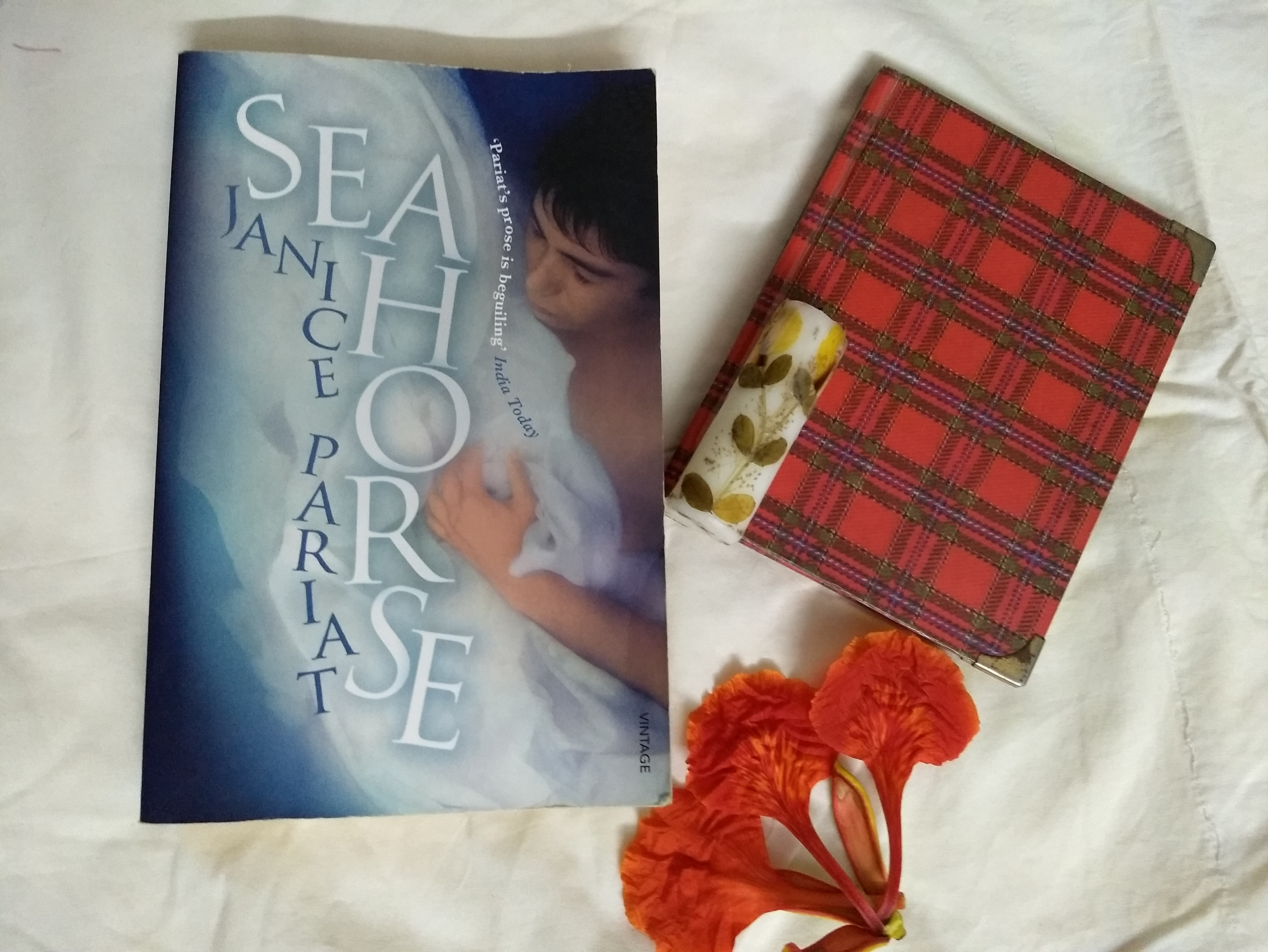
6th September is when 3 years ago in 2018, the Supreme Court of India ruled on Section 377 and decriminalised homosexuality. Hence, today’s book review is this beautiful and evocative novel, Seahorseby Janice Pariat.
Seahorseby Janice Pariat is about the relationship and love that the alliterative protagonists, Nem and Nicholas shared. Rather the novel is about Nem’s memory of Nicholas and the void that Nicholas’ leaving created.
Nem’s aching for Nicholas is not one of bitterness or surfeit weeping but one of a thoughtful and sharp reverie.
Nem was a student of English Literature in Delhi University when he met Nicholas, who taught art history. He happened to drift into one of Nicholas’ classes and was immediately taken in by his suave mannerisms. What follows in the wake of this serendipitous meeting is a warm romance and a blossoming of a relationship; one in which not only love but also ideas about art, poetry and literature are mutually exchanged. That is, until Nicholas disappears, taking with him every trace of his existence.
Ismat Chughtai’s stories and characters cut through time and remain relevant even in the 21st century. She wrote in Urdu and was part of the Progressive Writer’s Movement. The movement focused on how art can contribute to the betterment of society by commenting on its evils and hypocrisy.
Ismat Chughtai is well known for etching out female characters that did not fit any mould society cast for them. The characters are rebellious by their very nature or paradoxically through subverting the restrictions imposed on them. They dare to question. They dare to be themselves. Through such bold characters, Chughtai also sheds light on the barriers of gender, class, and caste prevalent in society during her lifetime, which unfortunately clog minds in India till today.
One of Chughtai’s most well known stories is Lihaaf or The Quilt as translated in English. She had to go to Lahore to face obscenity charges for this short story. Lihaaf is a curious mix of understatement and being out there. It does not explicitly mention sexual acts except obliquely. Yet what was unsettling for readers then and perhaps even now is the portrayal of same-sex love. It showed women not only in control of their sexuality but also boldly expressing it. Chughtai’s manner of unsettling the reader gives her stories an unparalleled power that still holds sway. Her stories prick at the norms and restrictions accepted as a status quo. It lays bare the faults in many of our beliefs, thus shocking the reader.
For example, in her short story, Mole or Til, she depicts a village woman, Rani, who poses as a model for the painter, Ganeshchand Choudhry. Rani is fully aware of her beauty and knows how to sway the people to do her bidding. Choudhry expects her to be grateful for letting her stay at his home. But Rani is not one to submit to feelings of pitiful charity. She is vocal about her desires and never lets Choudhry dictate her whether it is in posing as a model or otherwise.
Similarly and perhaps even bolder is her story, The Homemaker or Gharwali. The story portrays Mirza, a shop owner who lets Lajo be a maid in his house. Lajo is another carefree personality that Chughtai has created. She does not want to be shackled by marriage to one man. She is perfectly happy to love Mirza and take care of his house. But she would prefer giving her love to a lot of people rather than being tied to one man. The Homemaker shows how passion and love are supposed to be regulated and kept under control for the sake of decency. To escape this garb of decency, men court courtesans while women are expected to be pure. Lajo cannot succumb to these restrictions of being ‘good woman or wife.’ Chughtai thus portrays a society’s hypocrisy about marriage and its gendered double standards over a person’s desires.
The short story, All Alone, briefly traces Shahzad’s growth from college to adulthood. She finished her BA and ‘‘was inundated with marriage proposals.’’ She loved someone else, Dilshad Mirza, and not the proposals that came pouring in. Instead, she enrolled in a course for painting and becomes absolutely immersed in it. So much so that she does not realise the passage of time. Many things happened in between, notably India’s Independence and Partition. The story shows Shahzad choosing her own path and rejecting marriage. In today’s modern times as well, women are pressured into believing that marriage is the ultimate goal in their life. In Chughtai’s story, Shahzad showed how opting for a profession does not mean she was incomplete or discontented with her life; or that she longed for a soul mate. She chose to embrace her art and puts to rest any rumours about her being a lonely sad woman. She refuses to be an object of self-pity because the society believes that a woman cannot be happy alone. This story was way ahead of its time and is a brilliant portrayal of women as artists and their connection with their creation.
Chughtai’s short stories expressed different facets of female thought and desire in a witty yet detailed manner. The stories feel relatable hundred years later as they continue to call out hollow societal ideas and practices prevalent today.
Let’s continue with the celebrations of WomenInTranslation Month! Here is another great recommendation of a work written in Urdu and translated to English!
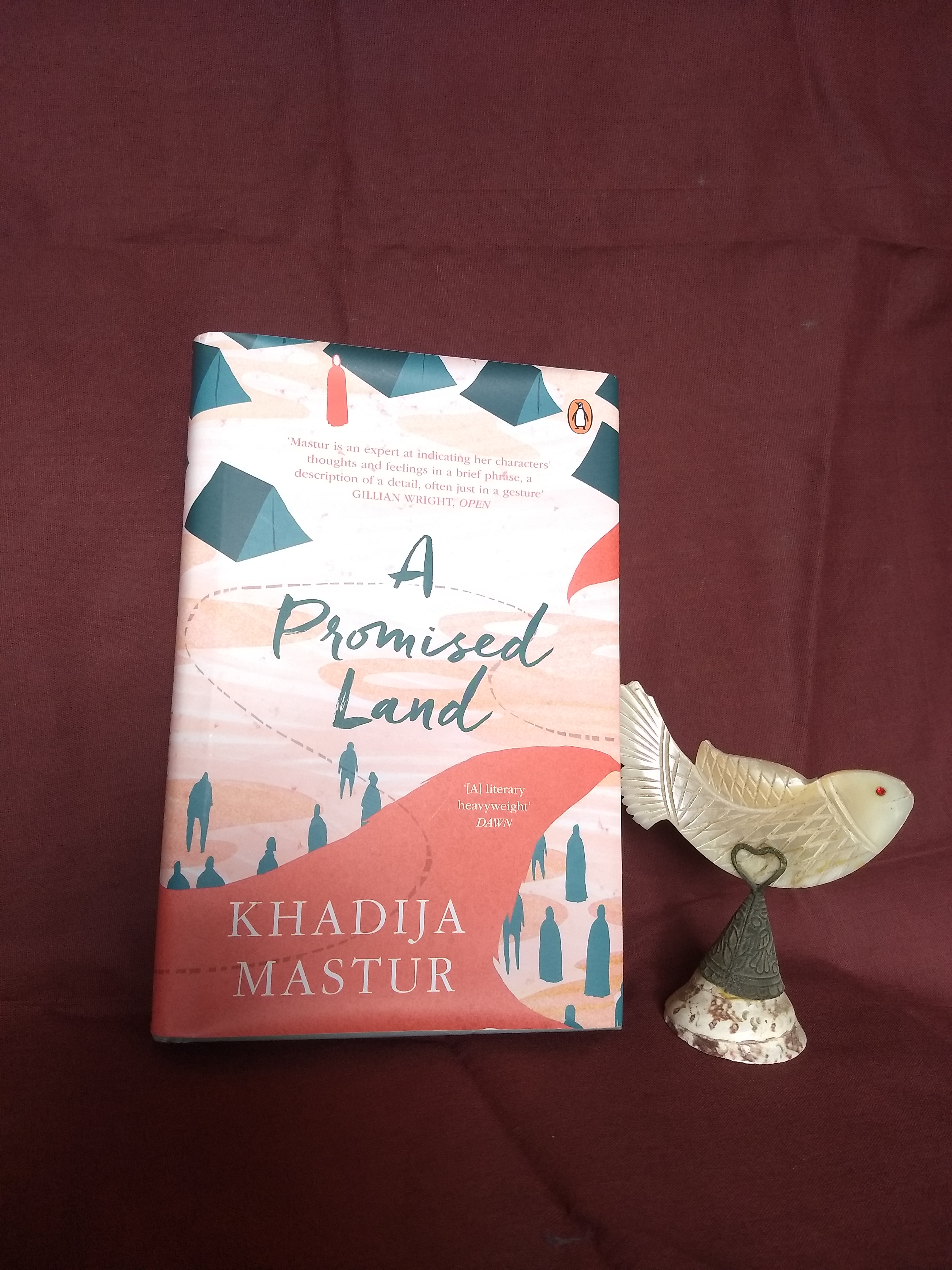
A Promised Land by Khadija Mastur is translated from Urdu to English by Daisy Rockwell.
Srilal Shukla in his Hindi novel, Raag Darbari, satirically took on the might of the post-Independence Indian bureaucracy and its circular, never-ending red tape. A Promised Land is not satirical but an incisive, feminist critique of Pakistan after Partition. The novel proffers a critical look at Pakistan post-Independence and how the hopeful visions for the country’s future and betterment crumbled. They were overshadowed by a corrupt bureaucracy.
It begins with the Partition’s aftermath, in the Walton Refugee Camp. This is where the novel, Aangan or The Women’s Courtyard ended with the protagonist Aliya working in the very same refugee camp. But this story is not about Aliya. It is about Sajidah. She lives in that camp with her father.
Like Aliya, Sajidah also believes in drawing her fate. In the earlier part of the novel, Sajidah remembers a folktale her mother used to narrate to her in which the youngest daughter of a king refuses to admit that the King decides her fate. She asserts that she is capable of making her fate. Sajidah identifies with this youngest daughter.
Although she wants to do just that, she is aware of the fate of single women in her society. Sajidah wants to break free from those constraints but she knows that for her survival, she needs to belong to a family; to a husband.
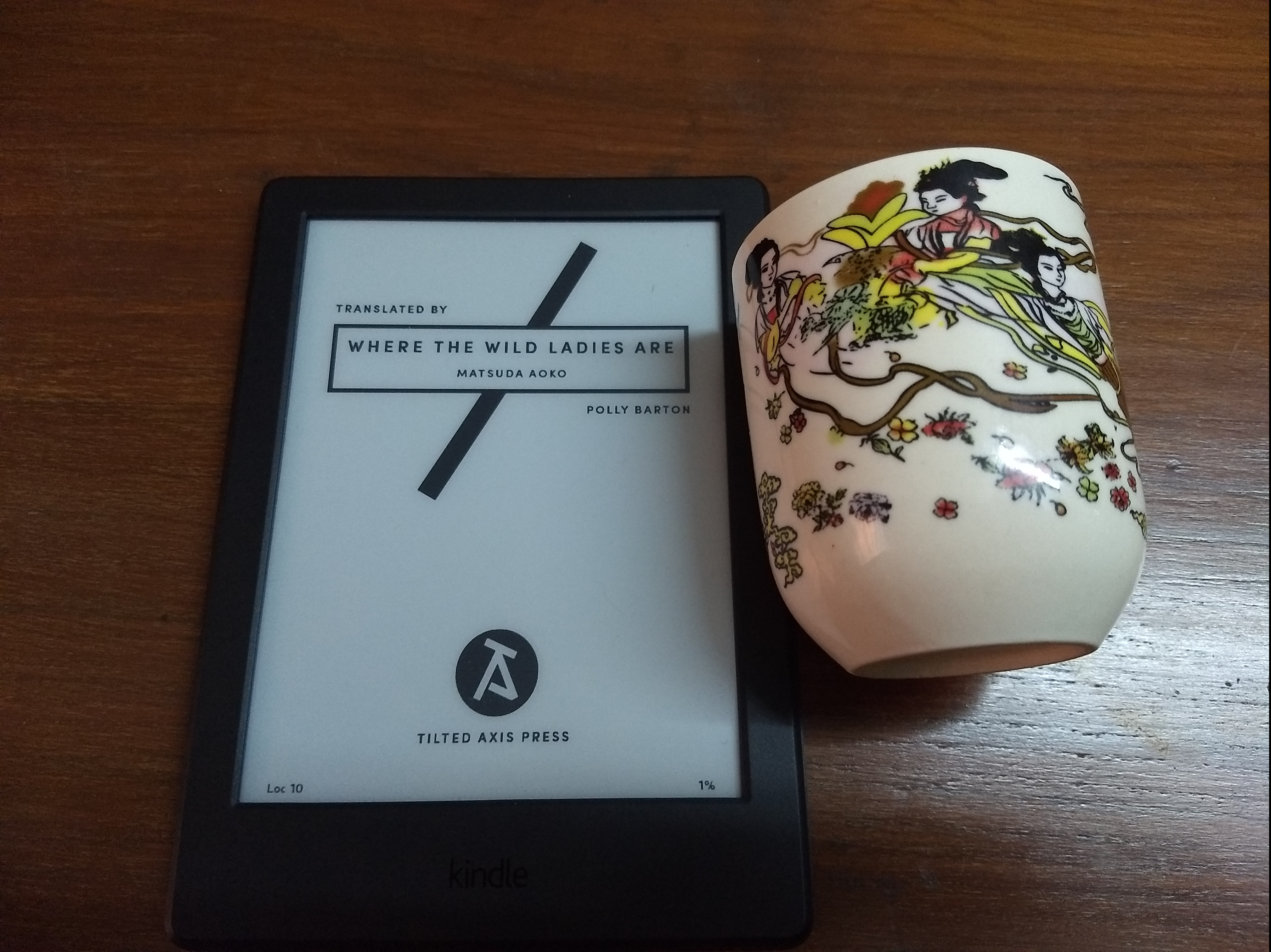
A great book to pick for WomenInTranslation Month is Where the Wild Ladies are by Matsudo Aoko. It is translated from Japanese to English by Polly Barton.
I first read this collection of 17 stories last year on my Kindle, when I reluctantly, with a hint of excitement, gave this reader friendly device a try! It was definitely worth a read for its fabulous feminist themes and the slighly dry British humour and words that the translator, Polly Barton, brought in to the book.
Where the Wild Ladies are re-imagines famous Japanese ghost or yokai stories with a modern and feminist twist. Owing to that, all the stories possess a touch of the mystical and whimsical. Strange and surreal things are bound to happen. However, Matsudo recreates the ghosts, spirits and characters as modern-day Japanese individuals who are plagued by disillusion and sadness. However, unlike the female characters of the original stories, Matsudo’s versions do not wallow or weep endlessly. They display subtle courage that allows them to live by their own rules and challenge every form of sexism from the casual to the upfront.
For example, in the second story in this collection, Smartening Up, the protagonist repeats self-loving affirmations to herself like a mantra to heal after a bad breakup. She tries to up her ‘romantic potential’ by embracing movie and advert lifestyles. In doing so, she decides to dye her hair blond because as we know, all blondes in American movies meet their soul mates. Interestingly, her dead aunt visits as a ghost and gives her sane advice about letting the wildness of her hair remain intact. The story presents an unabashed glimpse into the perceptions around body hair and how women are shamed for it across the world. But thanks to her dead aunt’s ghost, the protagonist sheds her inhibitions and thankfully not her hair.
In Smartening Up, the ghost showcases will power and challenges romantic ideals women are expected to live by. In the other stories of this book, the ghosts from the original story are reincarnated in a modern avatar where they are freer and are not tied down by rigid patriarchal rules.
One such beautiful story, The Missing One retells the tale of Okiku. She was a samurai’s servant, who was wrongly accused of losing one of the 10 precious plates in the samurai’s household. No matter how many times Okiku counted, she never found the 10th plate. The samurai decided to forgive her only if she became his mistress. Okiku refused and was consequently put to death. It is believed that Okiku’s ghost is never able to count to 10. A similar incident happens to Kikue, the protagonist in The Missing One. However, Kikue is not in a subservient position but a single woman and an owner of a shop: an unusual combination according to Japan’s standards. It is a heartwarming tale of Kikue navigating the mystery of the missing plate through her intelligence, despite the usual casual misogyny thrown at her for being a single woman running a shop.
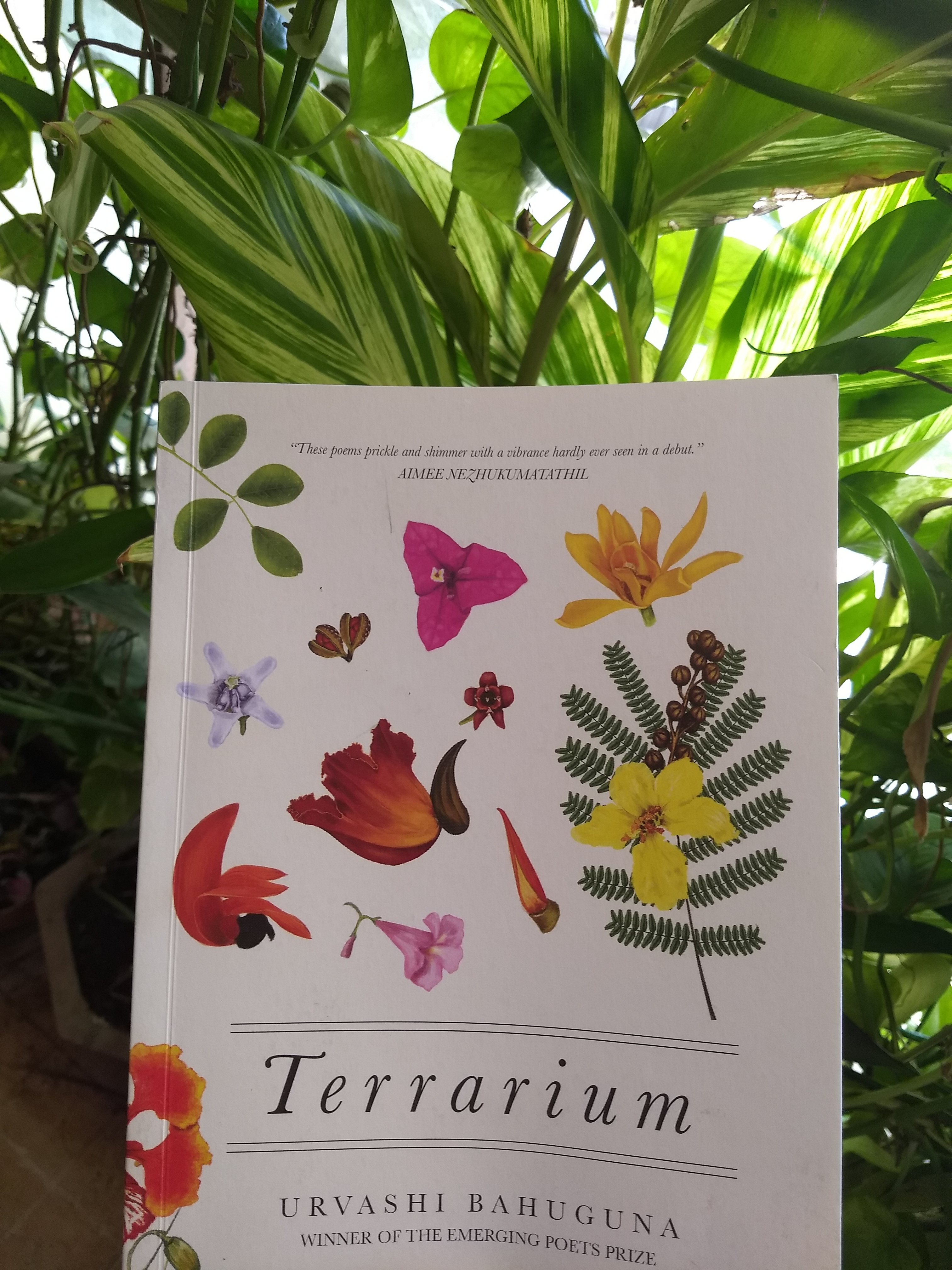
Terrarium by Urvashi Bahuguna is her debut poetry collection published by The Great Indian Poetry Collective. Her verses possess a singular and almost unnerving style of unraveling the magical from within the everyday. Terrarium’s poems touch upon the momentary motions of everyday life. Those motions may seem ephemeral but leave an immeasurable mark on all of us. For instance, the first part of the collection portrays how Bahuguna’s childhood experiences especially of moving to and living in Goa, shaped her perspectives.
In doing so, Bahuguna, vividly depicts her surroundings such that they come alive and remain etched in our minds. In ‘The Heart of a Mango,’ she conjures up a much followed and cherished summer tradition in many parts of India: of devouring mangoes of all kinds. She evokes the feeling of richness a mango brought to her family particularly to her father.
In ‘Last Ride before the Monsoon,’ she forges a primordial connection with water and how a part of us is lost to its infiniteness:
❝ Listening to the weeping on the water, some piece of us is lost too. And for being unknown it slips silvertailed below the still boat. ❞
The complete primitive and hence pristine aura of the poems is possible because she weaves in imagery of nature as we never imagined it before. She has an eye for the minutest detail and recreates it in extraordinarily surreal metaphors. This is best exemplified in the poem ‘Waiting for Movement.‘ It begins with a strikingly colourful description:
❝ The laburnum is late with its lightening yolk. An abundance of mulberries stains bowls. ❞
Thereafter, the tiniest movements that paradoxically encapsulate stillness, are described. Through this, she creates an apprehension that something is about to happen, only to end it with an anti climactic shattering of that tense stillness with a much-needed breeze.
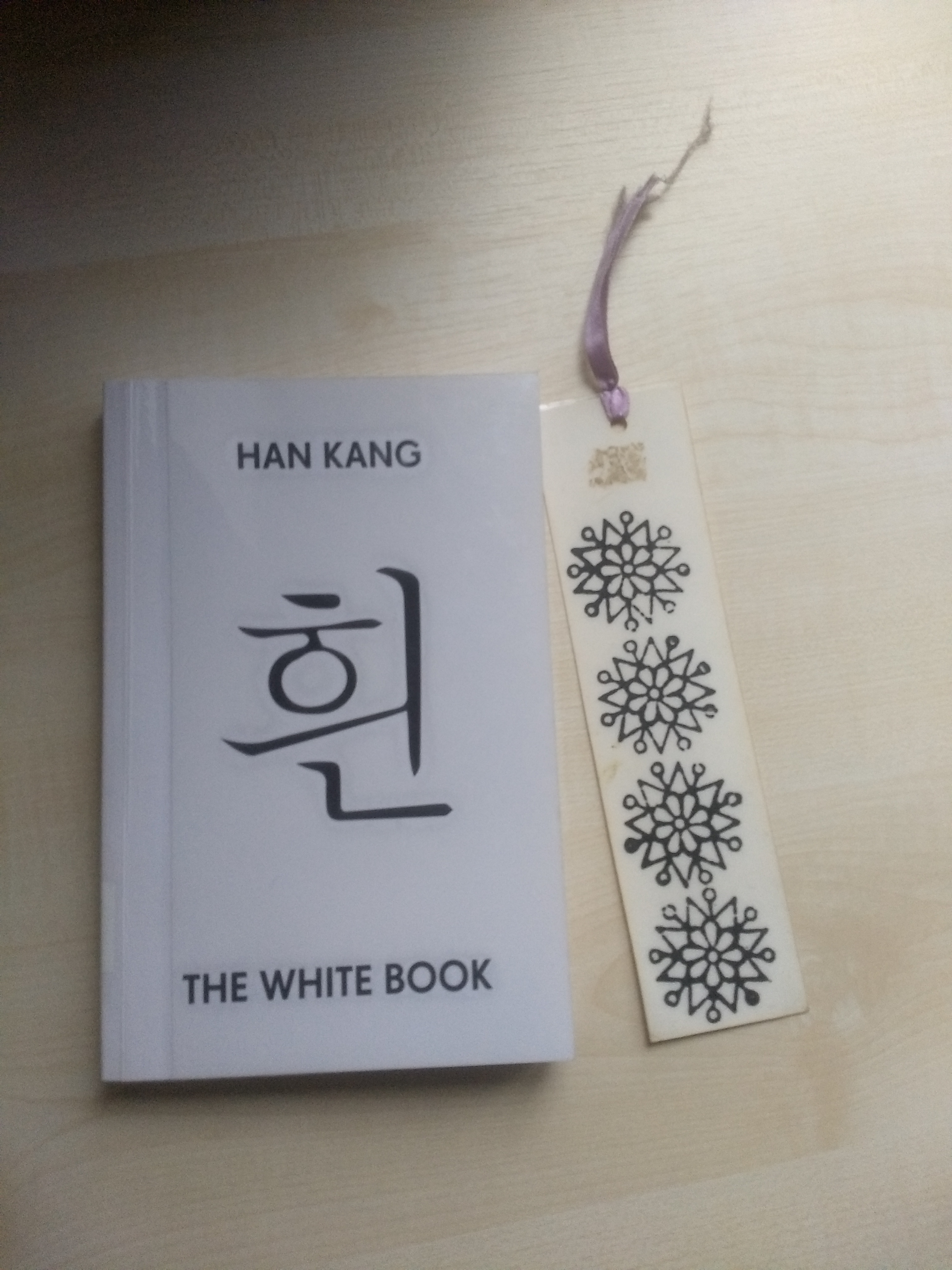
Han Kang’s The Vegetarian was a hit with the English-speaking audience when the English translation by Deborah Smith was published back in 2016. Her other novel, The White Book, which is also translated by Deborah Smith, defies any conceptions that a reader has of the form of a book. One could see The White Book as a novel, as a poetry volume with prose poems or even like a creative non-fictional journal where the author meditates about her surroundings and several other preoccupations that her churning mind throws up within.
Because of the ambiguity around the form of the book itself, it immediately engages the reader, compels one who picks up the book to choose, decide and think for oneself the boundaries between various forms and between fiction and non-fiction.
I read The White Book as more of a volume of poems where the author uses prose poems as a style of expression. I don’t think it registered in my mind to read it as a novel at all. This could be because of the brevity of words and more blank space on each page instead of the pages being crowded with sentences and phrases as a novel would usually be. Perhaps, the book looks different when it was written in Korean? Who knows? I don’t have access to that version. Nonetheless it was unique to dwell on how we perceive different forms and styles of books in the way they have been normatively presented to us and how we put those features in distinct categories.
Kang begins this novel (or poetry volume to me) with an introduction where she talks about moving to a snow-covered European city and elucidates her intention to write thematically about all the things associated with the colour, white, be it rice or moon or snow. And perhaps owing to this theme of depicting white in its various forms, and owing to the connotations white has across cultures, The White Book allows the reader several moments of poignant pauses to breathe in the peace or the succinct observation that the poems and words emanate.
The White Book is divided into three parts and one of the other thematic preoccupations of this work is the speaker or Kang’s reflections about her older sister who died only a few hours after being born.
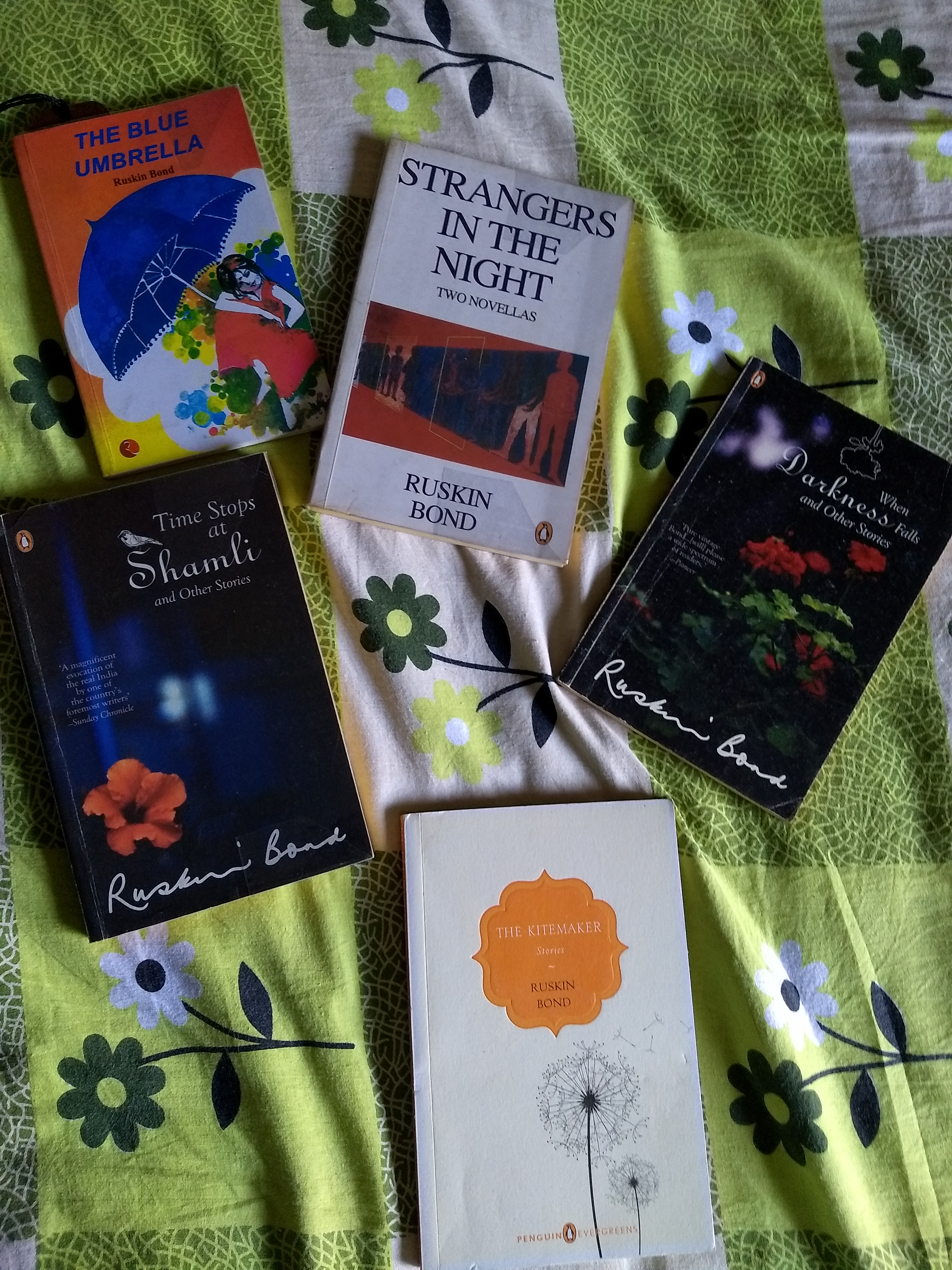
Ruskin Bond’s writing has always been a constant in my life since reading his stories in my English school textbooks. While the world only recently is going gaga over cherry blossoms, I still vividly remember reading in school about the quiet innocence and perseverance of Rakesh from the short story, The Cherry Tree, and how he planted the seed and despite all odds, was rewarded with the pink blossoms.
The depiction of the utmost simplicity in the characters’ actions and the vastness and joy that nature provides them has made Ruskin Bond’s writing endearing and lovable.
Most of his novels are set in the hills. The stories profess the writer’s close bond with the mountains and its people. His stories will always have characters that also, like the author, share a close bond with the nature that surrounds them. The closer they are to nature, the fuller and better their lives are. These characters will cherish the tiniest of miracles that nature offers to them like Rakesh’s delight at seeing the cherry tree blossom. These innocent delights, bereft of any greed, make Bond’s characters memorable. They enable the reader to take a break from the rat race and appreciate the simple pleasures of nature.
Ruskin Bond was born on this day in Kasauli in 1934 and after living in different cities in India and outside, he decided to make Mussoorie his home. He continues to live there in the Ivy cottage and regularly haunts the bookshops of the famous hill station.
Bond blithely intertwines his own experiences in his stories too so that on reading them, one might feel one knows the author better and along the way, can also take a trip down memory lane of how things used to be before in the towns and hills. Several of his stories therefore are coloured with an autobiographical tint, revealing the tidbits of the author’s many journeys in life.
This Mother’s Day, do remember to actually help out your mother and really understand her rather than pay her lip service!
To remind you of her importance, read the South Korean novel, Please Look After Mom.
Mothers are celebrated grandly across the world on this day. Motherhood is idealized as something pure and blissful. It might be that, but hardly does one get to see a different side of this ideal. This is the case in almost all societies.
Patriarchy’s continuing firm grip on our lives is manifested when we only acknowledge her existence to celebrate; never acknowledge her existence to help or understand the role of a mother thrust upon many women. There lies the danger in hollow celebrations: it does not bring about any change in the rut or routine and daily hardships of countless mothers.
To help you understand this analogy, think about the hailing of doctors and nurses as heroes during the COVID 19 pandemic. No doubt, it is important to boost their morale and confidence and to show moral support. However, if this celebration of our heroes does not extend to anything concrete such as better protective gear for them, oxygen supplies or increase in their remunerations, it becomes empty and superficial.
Similar is the praise heaped on mothers. If one praises her but does nothing to help out, she continues to be a sacrificial goat for the entire family. Unfortunately, then, the celebration comes to naught. The 2011 Man Asian Literary Prize winner, Please Look After Mom, by Kyung-Sook Shin looks at this dichotomy in the importance and negligence of our mothers.
The novel begins with the most straightforward sentence:
“It’s been one week since Mom went missing.”
It is a factual statement that hits you hard. Slowly the story unravels the emotional ramifications of this one incident through the different perspectives of a daughter, son and husband.
This time I muse about how decolonisation would work in the Indian context. While the UK universities are actively using decolonial approaches, I wonder if that is the case with Indian universities. Of course, decolonial approaches in India would look very different. The context would differ in each country. The context thus becomes crucial. In the UK, a decolonial approach implies reckoning with its colonial past and how it shapes UK in the contemporary scenario. What would a decolonial approach in India look like? India has to a large extent shed some of its colonial baggage and with political scenario changing in India toward a more right-wing one, politicians are no longer only blaming British for India’s woes or changing British names of streets or cities (as was the trend in Mumbai for some time) in a bid to usher in development or more ‘Indian’ ways of existence. The ‘Other’ has now become anyone who does not side with the government in power: so it could be just about anyone in India.
Despite the sweeping political divides, colonial constructs, globalisation and now neo-colonial/neo capitalist impulses continue to shape who we are. A big part of this is of course the English language. English has and continues to rhold sway as one that will help in greater social and economic mobility and improve career prospects. English continues to be widely spoken in Indian urban areas and also becomes an important common language given the country’s linguistic diversity. Interestingly, recent attempts to impose a national language in India have also met with a lot of opposition, where people would prefer English over Hindi, given the politics of power behind the latter’s imposition. So English is not just seen as a colonial langauge anymore and debates about the validity of English have shifted from how it used to be in post-Independence India. English has further proliferated because of the growth of the internet and increasingly smart phones, that make the language even more accessible for large swathes of the population: urban or rural. English is definitely here to stay. And of course, we all know about how Indians have created a different kind of English: the Indian English and how it merges with other regional languages: Hinglish for instance. I as well speak more Hinglish and English in general than any form of pure Hindi which is my mother tongue. So to echo what Chimamanda Adichie says in her seminal interview, Indians do and have taken ownership of the English language. This is also seen in the ways in which English writing in India has gained immense popularity.
But then should a decolonial approach start with languages? Should we not speak in English? Should we discard that language? That is inevitably difficult to do, because of the global world we live and how English education in general is given greater privilege in India, and how English medium education does indeed open up more career opportunities given how privatisation and neo-capitalism has seeped into India, particularly urban India.
The National Education Policy’s thrust toward multilingual learning and teachingnot just at the school level but at the university level was quite a unique approach. Study of different languages in English medium universities is generally not given that much support. Most universities that run regional languages departments have fallen into a state of systematic neglect. Schools in general across India do already have a policy of three language study, however the numbers of regional language medium schools has diminished and almost disappeared (at least in urban areas).
The importance of being multilingual or bilingual are many and the world is only just realising its benefits which again goes to show the entrenched beliefs about the primacy English holds globally. This does not mean that its primacy has reduced; in fact racial abuses toward those speak their mother tongues or speak English imperfectly still continues in countries where hyper nationalistic discourses are being associated with the English language.
So English reigns supreme in India in education, in career prospects, in offices (especially the private sector in urban India) while the NEP pushes for multilingual education in universities. So how do we then decolonise universities through language?
Decolonisation is increasingly become a buzzword in the UK, especially in universities where there is a push toward a decolonial curriculum. It is important to note though that the concept has been around for long. For each country, decolonisation would entail a different process. Perhaps for the UK, it would be more meaningful to engage at both school and university level with its colonial past and look at how contemporary systems and social mores have been shaped by colonialism. I remember the first time when I heard from one of my colleagues about how colonialism is not a major part of syllabi in the UK. It baffled me and still seems quite a strange phenomenon that defies logic in my mind, because if that is not one part of the syllabi then what is taught for say in history of Britain after 1600s? It has always made me wonder and still makes me wonder what is part of the history syllabi there then?
In literature, a push toward decolonial studies would mean incorporating a range of world literature as well. This has always excited me because even when learning literature as an undergraduate student or in my Masters, I often wondered why is my literature so white? Why are only these few authors taught? Why not others? It was refreshing and invigorating when in during my BA, we focused on Indian literature and I remembering discovering so many Indian authors and feeling a sense of oh I can see bits and pieces of myself in this literature; something which was not there in say reading Dickens or Miller. I still remember the feeling of recognition or a kind of empathy I felt for one of characters in Mistry’s novel, Such A Long Journey, simply because he decided to pursue Arts. It is such a common aspect in Indian society to be disparaging of the humanities and even more so now with a push toward more right-wing fundamentalism. But to see this common perception represented in literature felt oddly good. I had not faced any opposition from my parents to study literature but remember some family members and people in general outright showing their disapproval for me pursuing arts/humanities. The point I am making through this diversion is that it is high time we question the English literary canon, particularly because one of the most widespread effects of colonialism (and now exacerbated by globalisation and neo-colonialism) is the acceptance of English as a global lingua franca. Throughout the world, people write literatures in English and even those who do not, get translated into English and gain wider, more international readers. It is essential to broaden our mindsets through a broadening of canons. The need becomes even more urgent as individuals become compartmentalised into very narrow points of view thanks to social media. its vast networks of unfathomable algorithms, and television media. Reading different perspectives through multicultural reading habits would go a long way to create individuals who do not merely think about different people through a prejudiced lens.
In the UK, though there is a push toward decolonising the curriculum, what then of the university itself? How would universities change policies to become more decolonial institutions? Is it merely enough to have decolonial syllabi in universities when the university itself still reaps benefits based on several different colonial privileges?
Note: This is just a rambling review where I have put down my thoughts because it was the first book of 2021 that was thoroughly stimulating in so many different ways.
There could be some spoilers in the way as well. You have been warned!
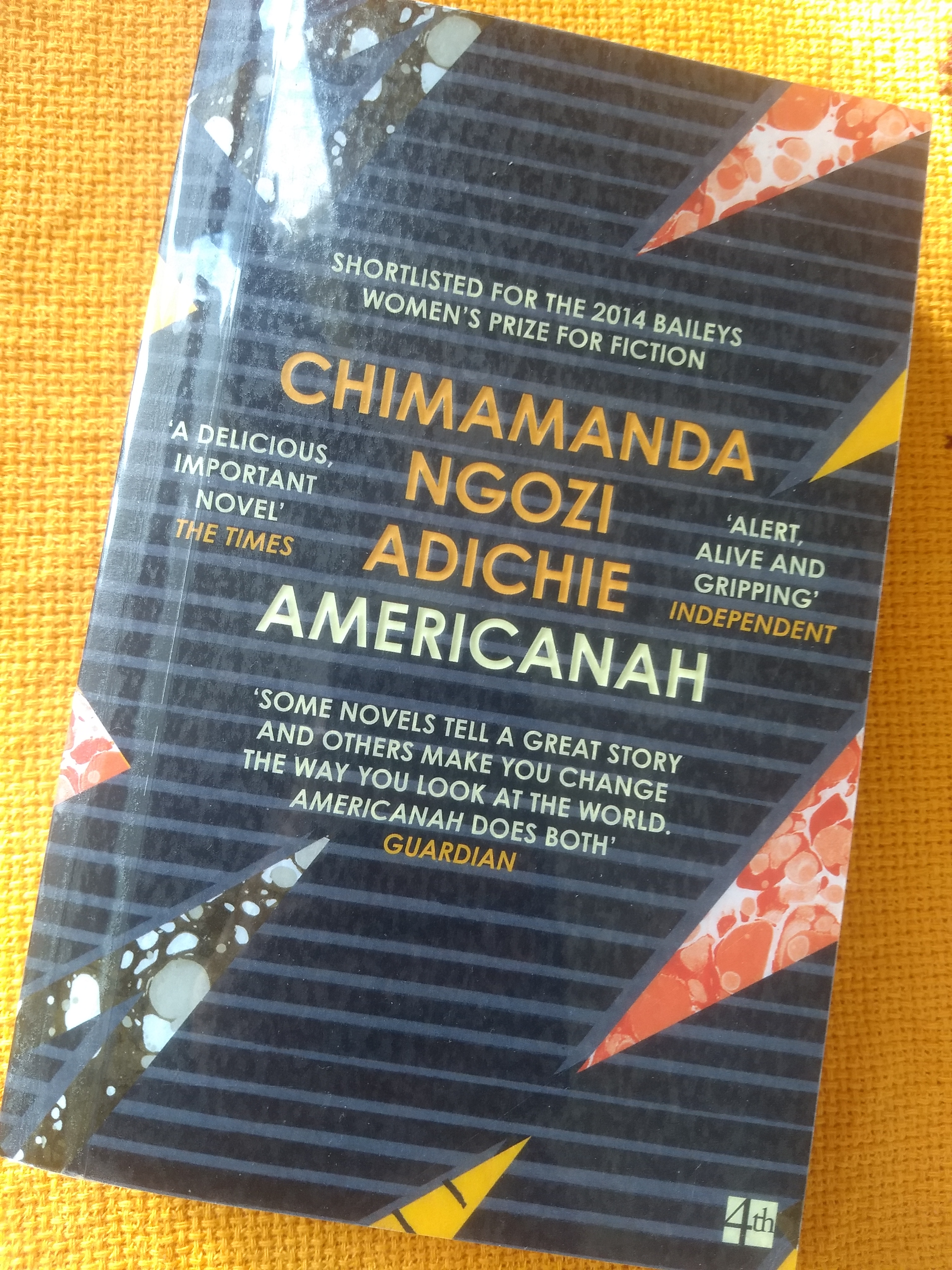
I finally got around to reading Americanahby Chimamanda Adichie. When the novel was published in 2014, I had stayed away from the book because I thought it is only about an immigrant narrative and at that time, I was a bit saturated with immigrant novels.
However, I picked it up last month and was absolutely thrilled to immediately feel drawn to it from the very first line of the novel itself. There is a certain boldness in beginning a novel by describing how a place smells like absolutely nothing! As I began to get even more deeply immersed in the book, I soon realised that Americanah is not just about immigration but also intertwines big topics about identity and race, and unpacks them so unabashedly that it is refreshing.
Americanahcenters around Ifemelu with a parallel narrative about her friend and boyfriend, Obinze, as well. Ifemelu grows up in Lagos, Nigeria and the earlier parts of Americanah focus on her childhood and her experiences as a student there. Ifemelu eventually moves to the US to pursue her degree because of the constant teacher strikes in universities across Nigeria. Adichie etches out Ifemelu’s experience and struggle in America as a student, trying to pay for her tuition fees through job. A lot of her initial experiences in America were very relatable, especially her initial shock at how expensive things are or her fear of spending money at all. Ifemelu as a character is very observant and her perspectives around the different connotations of English back home or American English, or about the constructions around race identity in America reaffirm relevant debates about World Englishes as well as ideas of being racially colour blind and other forms of casual racism. The latter issues about race become even more pertinent, given the Black Lives Matter movement. This is one reason I am glad I read this novel when I did because it allowed me to pause and comprehend these notions much more clearly and in a nuanced way than I would have back in 2014. That is one of the beauties of this novel, Ifemelu’s (and by extension, Adichie’s) powerful ability to pinpoint the exact nuance of how racism functions through different means and how it gets recast and reframed in contemporary discourses. Americanah thus does not just simply look at race in a vacuum, but also how it impacts Ifemelu’s own views about herself, since she is not African-American, but from Nigeria.
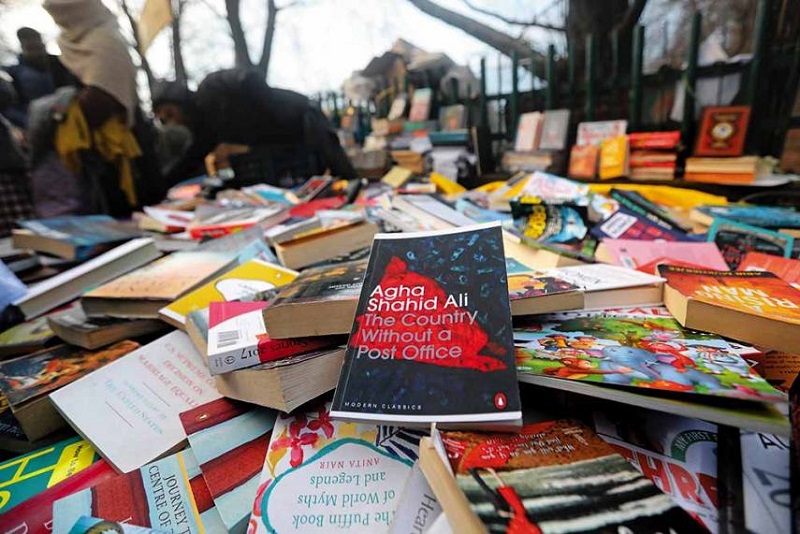
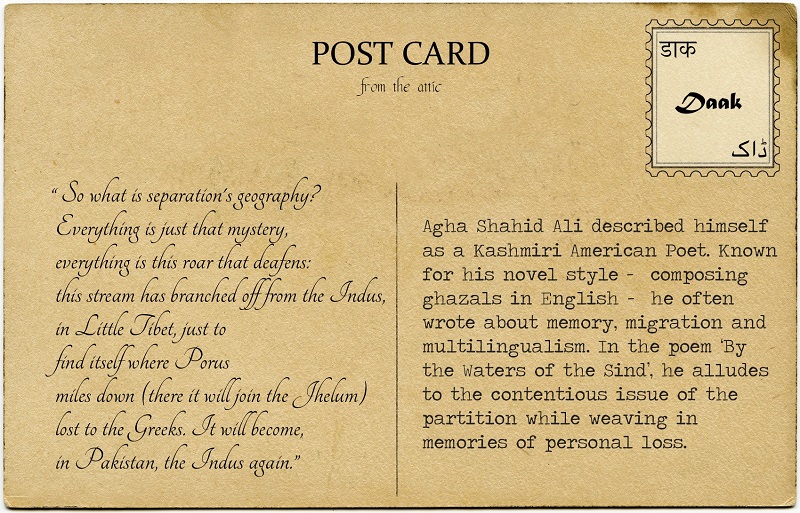
The Country Without A Post Office (1997) became one of his most well-known poetry collections, encompassing several facets of Kashmir’s destruction in the 1990s. The poems in this collection portray a Kashmir ravaged by terrorism, but go beyond statistics to show the impact of the rise of militancy on individual lives, the state’s culture, and on Ali himself.
Ali’s Poetry As Political
Though Ali’s poems take no political sides, they are political in the way they take the side of humanity in condemning all forms of violence that wrecked Kashmir during the ’90s. This condemnation comes in the form of invoking a Kashmir from a bygone era when unity reigned and not terror, or in recalling a deep sense of Kashmiriyat that previously united the people. It is these invocations that suffuse Ali’s poems with his trademark melancholic tint.
The condemnation also comes by acknowledging the violence and its repercussions on both Kashmiri communities. For example, in the poem, ‘Farewell’, from The Country Without, the narrator (presumably Ali himself) addresses a Kashmiri Pandit friend, stating:
At a certain point I lost track of you. You needed me. You needed to perfect me. In your absence you polished me into the Enemy. Your history gets in the way of my memory. I am everything you lost. You can’t forgive me. I am everything you lost. Your perfect Enemy. Your memory gets in the way of my memory.
These lines depict the subsequent and almost inevitable hate that follows terrorist attacks – hate that is used to further pit one community against the other. Yet Ali manages to pre-empt this hate. He realises that the two communities will now view each other with mistrust, turning the other into an ‘enemy’, even though they used to coexist harmoniously earlier:
In the lake the arms of temples and mosques are locked in each other’s reflections.
And, it is because he anticipates this hate that Ali quietly emphasises on peace at the end of his poem, despite knowing it to be a difficult prospect:
There is everything to forgive. You can’t forgive me. If only somehow you could have been mine, what would not have been possible in the world?
The poem, thus, as Claire Chambers mentions in her essay, ‘The Last Saffron: Agha Shahid Ali’s Kashmir’, is ‘about the ‘othering’ of the two sides in the Kashmiri conflict’.
Though his poems speak of a time over 20 years in the past, many of the themes embedded in them are still relevant when one examines the politically oppressive manner in which Kashmir has been handled. ‘Farewell’ bids a mournful goodbye to Kashmir’s former peace, while finding relevance today in the ongoing religious and political polarisation of communities.
While the Internet did not exist in the ’90s, Ali’s poems talk about a different clampdown of communication when telephone lines and post offices were shut leading to countless unsent letters and postcards. In ‘The Floating Post Office’, from The Country Without, Ali portrays a city enveloped in a ‘fog of death, the sentence/ passed on our city’, where the roads are closed but the canals still function. Hope comes in the form of one quaint floating post office as it delivers letters; words that let people know their loved ones are alive. The waterways, thus, become vital for everyone’s survival, with the postman on the gondola holding on to the letters ‘like a lover, close/ to his heart’.
The titular poem from The Country Without also conveys the desolation and devastation of a land where no letters are being delivered:
archive for letters with doomed addresses, each house buried or empty. Empty? Because so many fled, ran away, and became refugees there, in the plains
In the poem, a solitary figure is wandering the city’s streets and taking in the destruction. In an attempt to understand the havoc, he reads these letters and answers them:
I read them, letters of lovers, the mad ones, and mine to him from whom no answers came. I light lamps, send my answers, Calls to Prayer to deaf worlds across continents. And my lament is cries countless, cries like dead letters sent to this world whose end was near, always near. My words go out in huge packages of rain, go there, to addresses, across the oceans. It’s raining as I write this. I have no prayer. It’s just a shout, held in, It’s Us! It’s Us! whose letters are cries that break like bodies in prisons.
One can’t help but interpret his answering of the letters as a cry for help to the outside world from which they are now cut off. It is his way of reminding the world that they exist. The letters are cries of anguish, cries of wanting to be recognised, remembered and treated fairly. Though written in 1997, the poem is almost prophetic, mimicking the ongoing communication clampdown in Kashmir where it is, once again, cut off from the rest of the country. It has, very literally, become a country without a post office.
Another pertinent poem from The Country Without that comments on the centralised decision-making process for Kashmir is ‘Muharram In Srinagar, 1992’. The opening and closing lines are similar, and succinctly use the metaphor of a bureaucrat from the plains bringing in death and pain to the region.
Ali describes the bureaucrat’s efficiency and the bubble he lives in:
He travels first class, sipping champagne… He descends. The colonels salute. A captain starts the jeep. The Mansion by the lake awaits him with roses…. The Mansion is white, lit up with roses.
He then juxtaposes this rosy picture with the horrors of death in the valley: In the Vale the children are dead, or asleep… He’s driven through streets bereft of children: they are dead, not asleep, O, when will our hands return, if only broken?
This contrast is telling, especially today, when politicians sitting far away decide on the fate of a region, without taking a deeper look at the consequences of their decisions.
While Ali did write from a distance about his homeland, his words still carry an unbearable sense of loss and suffering that he felt and witnessed on his visits home. He used his words as a medium of resistance and to question the insensible violence wrecking his homeland.
The century is ending. It is pain from which love departs into all new pain: Freedom’s terrible thirst, flooding Kashmir, is bringing love to its tormented glass. Stranger, who will inherit the last night of the past? Of what shall I not sing, and sing?
We are now well into the new century, and recently celebrated the beginning of a new decade. And, it is time to pause and read Ali’s poems to remind ourselves to not fall prey to one-sided arguments that solely peddle hatred and hypocrisy. It is important to read his poems to understand the Kashmir conflict on a humane level and to know that love and friendship triumphs extremism and animosity.
*Disclaimer: A free copy of the book was provided to me by the author in exchange for an honest and unbiased review.
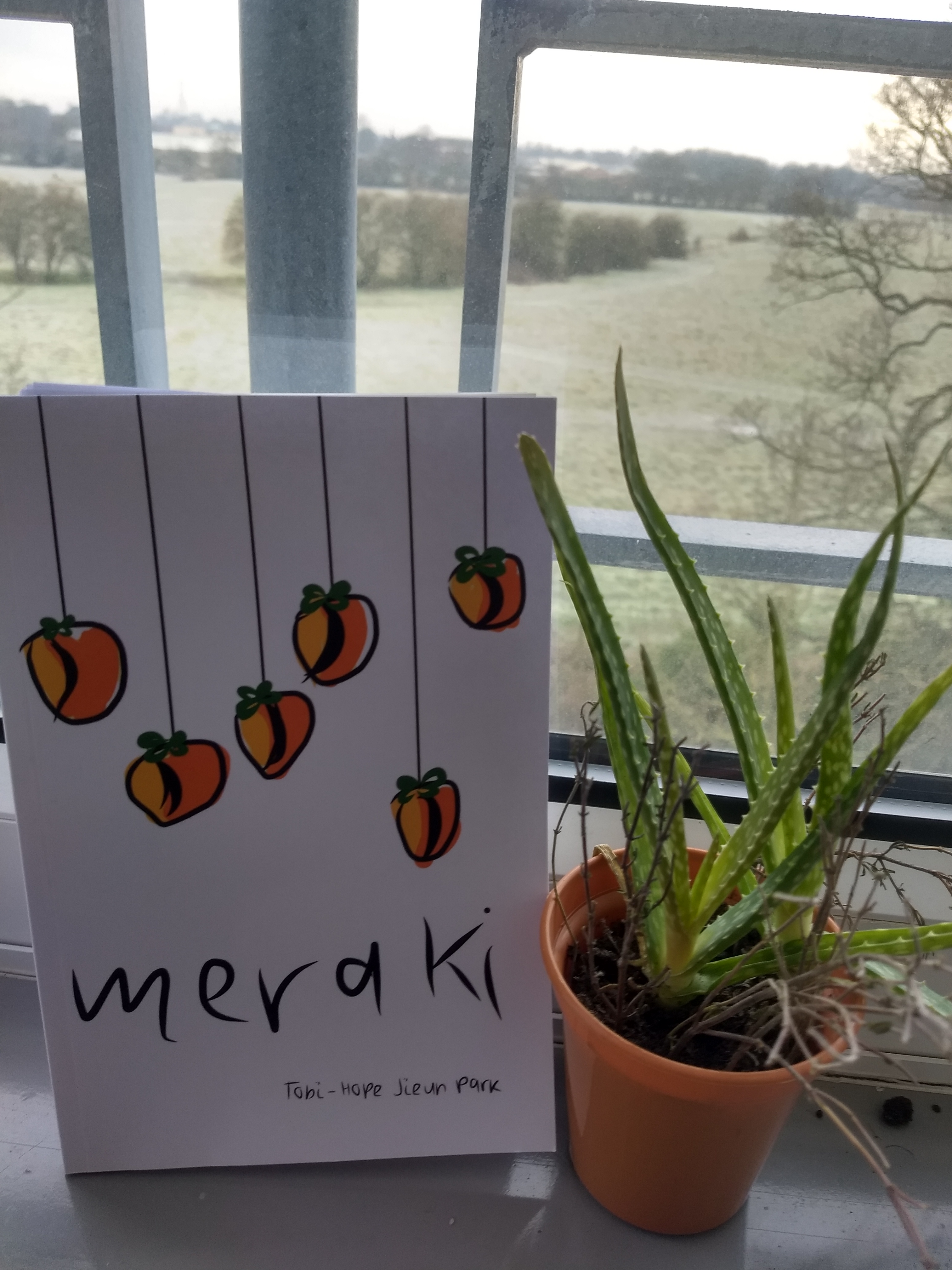
Merakiby Tobi-Hope Jieun Park is a debut collection of poems published by Atmosphere Press.
The poems are at once thought provoking, beautifully vivid and visual while also occasionally etching out the complexities of Korean-American identity. Almost every poem of the collection begins by focusing on a simple moment that is made quite surreal with the language used to describe the moment. This technique flows into the rest of the poem, creating breathtaking entries that mesmerise the reader immediately. The surreal overtones are further added by the unique metaphors that bring in quite unusual comparisons that make the reader go, “Ah! That’s extraordinary!” These exquisite metaphors show the poet’s power of observation and insight to combine the most unfamiliar of things: a series of letters to bioluminescent planktons, crayons to flowers kissing or stars to porcelain.
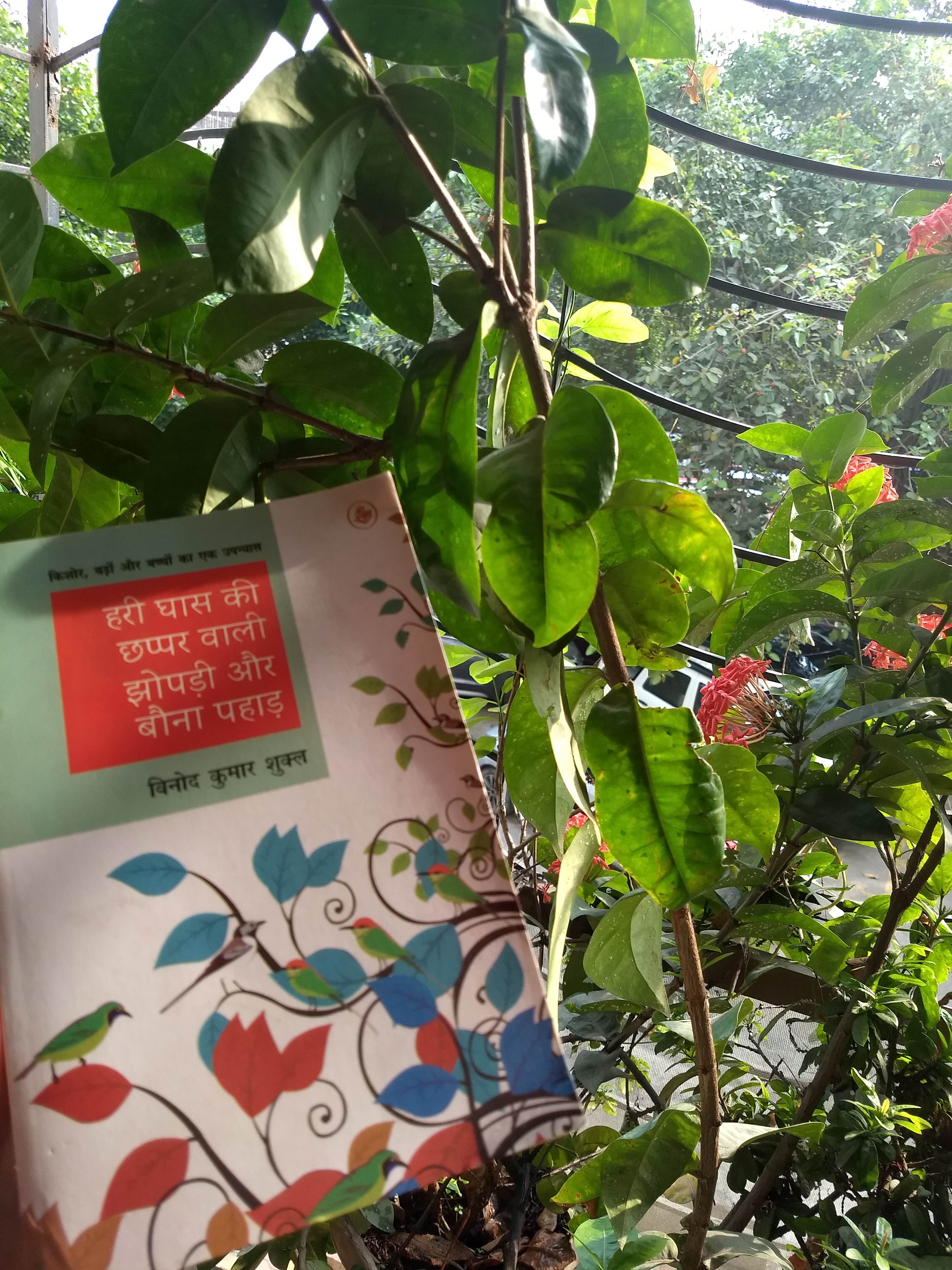
The Book Cafe wanted to start it off by reviewing this gem of a book by Vinod Kumar Shukla, whose birthday is also today!
Fantasy books are the surest way to escape the real and enter a completely new world. Magic realism is another genre that presents a unique blend where you are in the real world, yet experience the impossible or the magical.
To escape the uncertainty and anxiety, Vinod Kumar Shukla’s recent Hindi novel, Hari Ghaas Ki Chappar Wali Jhopdi Aur Bauna Pahad(published three years ago) is a must read. It takes the reader through a dreamlike ride of fun and adventure of the school children in a small village. Shukla weaves in fantasy to the realistic setting of a village in India, most possibly from his home state of Chhattisgarh.
This is why this novel can be considered as a shining example of fantasy and even magic realism. The beginnings of magic realism are attributed to several Latin and South American writers such as Jorge Louis Borges, Gabriel Garcia Marquez, Isabel Allende and Laura Esquival among others. It is a genre popular across the globe from Murakami to Toni Morrison. However, Indian writing has not fully embraced this genre with a few exceptions, notably that of Salman Rushdie.
Thus, when I bought this book because of its title and when I read it, I expected it to be a fun children’s novel. It was exactly that but the surprise was how subtly the author has mixed seemingly impossible things to the real life adventures of the three protagonists, Bolu, Bhaira, and Kuna. The school they go to is itself an example. It does not have the usual benches but instead the children sit on gunnysacks on the floor and the school’s thick walls have shelves or cubbyholes which are occupied by pigeons if not by the children’s bags and books. Eventually, even kids begin sitting in these shelves, first during their free time and later even during class. Imagine, trying to take your seat by climbing up ladders!
Female perspectives in the mythic and folkloric world are rare because of the universal importance placed on male perspectives. A male-dominated society puts the right to tell stories into the hands of men thereby appropriating women’s realities and downplaying them. Consequently, an idea has formed over the centuries that male experiences, then, are the norm to define oneself as humans.
Over the past few decades, feminist folklorists have tried to reclaim these marginalised voices and give them the space they have been stripped of over the years. Similarly, feminist revisionist mythology writers also try to recreate myths to give prominence to the hitherto unheard female stories and versions.
Carol Ann Duffy’s poems in her work, The World’s Wife, belong to this category.
Rajitha is a 29 -year-old from Hyderabad. After working here and there, and tiring out, she is currently relaxing while waiting for inspiration to do something exciting. Check out her Instagram, wetalkbooks, where she posts about more such cool books!
Note: This review contains spoilers and disturbing excerpts from the book.
Blasphemyby Tehmina Durrani was published in 1998 and I happened to read it in 2020 by chance. All the while that I was reading the book I wondered, how much can a woman endure? Also, why and how am I able to go through this nonsensical abuse? But I did anyway. I got to the end of it and was without doubt shaken.
I met with countless women, from so many diverse walks of life. I heard them share stories of abuse of all kinds. Listening to them first hand didn’t pain me as much as the life story of Heer, the protagonist of Blasphemy.
Set in Pakistan, the fictional tale is based on real life incidents of a woman who is married off to a Pir. He lives exploiting people in the name of god and makes you wonder, where does it stop? The book opens with the death of this monster, which could be the reason why I was so determined to finish – despite how much I squirmed through the process.
Heer is a beautiful woman born into a poor family. On the day that she receives a proposal from a man, who in her teenage mind is handsome and romantic, Heer’s mother fixes her wedding with a ‘rich and powerful’ man. Before Heer can make sense of all that is happening around her, she is married off. Raped on her wedding night, which she wonders if it was death, she is still trying to understand what is happening to her and why. Soon, survival becomes priority, because there is absolutely no escape from the monster, his activities or anything else that has to do with him.
The book is a depiction of Heer’s mother’s words – ‘we women are known to be a curse.’
This sets the tone of the book – all the women believe this and the men live by this. Heer naturally questions all the nonsense, but only in her head. The conflict between her thoughts and her actions is out there. For instance, when her monster husband comes home one day and summons his first daughter, a child and exploits her, Heer replaces her with an orphan house girl. She goes through an emotional turmoil with this decision. However, the thought of protecting her daughter becomes her consolation. This decision of Heer’s comes after she sees how another house girl’s spirit is killed after she is taken by the monster.
*Disclaimer: A free ARC of the book was provided by NetGalley in exchange for an honest and unbiased review.
As the title of Jihyun Yun’s poetry volume, Some Are Always Hungry suggests, the poems feature food and hunger in all its forms: the decadent, the delicious, the heartwarming, the sparse and the ravaged. Food is at the center of existence in this collection. Its role in shaping one’s identity, memories and family ties are subtly depicted through the majority of her poems.
Jihyun Yun being a second generation Korean American, the other themes of Some Are Always Hungry revolve around ideas of immigration, feminism, Korean history and her family’s own stories. However, all these themes, like planets, revolve around the sun, food.
The descriptions of food in the poems are always indulgent, even when she speaks of the unimaginable hunger the poems’ persona faced during the Korean War in the early 1950s. Yun brings out both the visceral as well as the subtleties of making and enjoying any meal. She minces no words when it comes to vividly describing the preparation of the meat for the meals. Yet, she can easily and gently introduce the delicateness of enjoying all the ingredients of any dish. For Yun, food was the one crucial link to her past and to her present immigrant identity. This is brought out right at the beginning of the second poem, My Grandmother Thinks of Love While Steeping Tea.
“Drink it all, dredge the bottom for sunk honey pull the thumb of ginger in to your mouth and suck. I mean for you to taste your inheritance. The gunpowder, our soil.”
Food is political and not new to the idea of ‘othering.’ This is seen in India as well where food of certain states is considered strange or barbaric. Worldwide as well, the distaste for food consumed by East Asian people, especially China in the wake of COVID-19 pandemic, has increased. Although it is alright not to be used to a particular food or having only a set food as one’s comfort food, it is rather narrow-minded to mock cuisines of other countries or cultures merely because they are different from one’s own.
Perhaps as a result of such a constant ‘othering’ of her own Korean cuisine, in the poem, Benediction as Disdained Cuisine, Yun reclaims all the food items the persona or the poet has forgone. What is powerful about the poem is how it reiterates the phrase, ‘give me’ before listing out the food item the poet has avoided for far too long. Two words repeated are all it takes in a way to make a culinary heritage worthy again. It shows an assertive persona, one who is unwilling to erase her identity.
Food is one sure way to remain true to one’s own culture and identity. This is even truer in Diaspora literature. For Jihyun and her family, food was a way to show affection to each other. This perhaps explains why food is central in her poems. Jihyun Yun explores all facets of food and how it can speak volumes about a person.
Jihyun Yun’s family history and memories are irreversibly linked with the home country, South Korea. Her poems throw light on these three aspects through an interplay with food. The poems pull you in with all their tempting aromas, and then throw in the most painful remnants of her family’s history.
For example, the poem, Recipe, reads like a recipe. But Yun also narrates the disquieting experience of the Japanese occupation of Korea. Her grandmother prepares the dish and still confuses the Japanese and Korean words for the food items. Under the Japanese occupation of Korea, Koreans were not allowed to speak their language and were often forced to adopt Japanese names. The fact that the poet’s grandmother still confuses the words and “cannot discard Japanese” shows “a slim silhouette of occupation tethered to our language like a haunting.” Yun smoothly merges the act of cleaving the ingredients to the idea of a cleaved mother tongue or language.
Since preparation of the food is considered largely a womanly task, Yun also explores the notion of female labour and sacrifice. In the opening poem of Some Are Always Hungry, All Female, Yun describes the act of buying food from the market and her grandmother or halmeoni dismantling a crab for a meal. Through the metaphor of women being confined to cook even meat that is female, Yun hopes for freedom. It is a decidedly intrepid poem but one whose boldness and power sneak up on the reader slowly but surely.
Since this is the opening poem, the unexpected juxtaposition of the gendered food and gendered tasks immediately pulls you in and you know at once this book is going to be a remarkable read.
And oh what a treat it is to perceive and absorb all the paradoxical flavours of Yun’s poems in Some Are Always Hungry! From being no holds barred in their directness one moment to scaling back and bringing forth the most insidious of all metaphors in the very next, the poems in Some Are Always Hungry pack a powerful punch. They explore elements of hidden Korean history as well as the current realities of immigrants and assimilation. Yun also audaciously explores feminist topics such as in Menstruation Triptych, she speaks about three different perspectives to the monthly cycle. In Caught, Yun portrays the point of view of a rape victim questioning herself after the crime. It lays bare the constant victim shaming girls are subjected to. The Tale of Janghwa and Hongryeon is a retelling of the eponymous Korean folktale. It is a painful reminder of the many taboos that society still imposes on women.
All in all, Some Are Always Hungry includes a strikingly diverse collection of poems that captivate with both the personal and the historical.
*Disclaimer: A free PDF copy of the book was provided to me by the author in exchange for an honest and unbiased review.
Still not over Halloween? Didn’t think your kids got their fair share of fun cause Covid-19 ruined another great festival? Not over the Halloween hangover?
Don’t worry! Here is a great fun colouring book with a twist to channel the remaining Halloween enthusiasm for the year!
It is Halloween Coloring and Activity Book: The Underground Toy Society by Jessica Adams. It is a creative and really engaging.
The colouring book is not just simply colour here or there as you wish but has themed colouring sections and activities as well added to the colouring. The kids get to draw (such as drawing a face on a pumpkin) or get to practice their numbers and counting skills (How many large pumpkins are there?).
They also get some practical tips about Halloween like some safety tips to keep in mind while celebrating the festival. But these are not simply just preached to the kids, but they have to think and jot down their own safety rules which is a great way for kids to retrospect about the ways in which Halloween can be made safer. It is also a must especially in this time of the pandemic.
















 The Book Cafe